Easy to Grow
Cnidoscolus aconitifolius
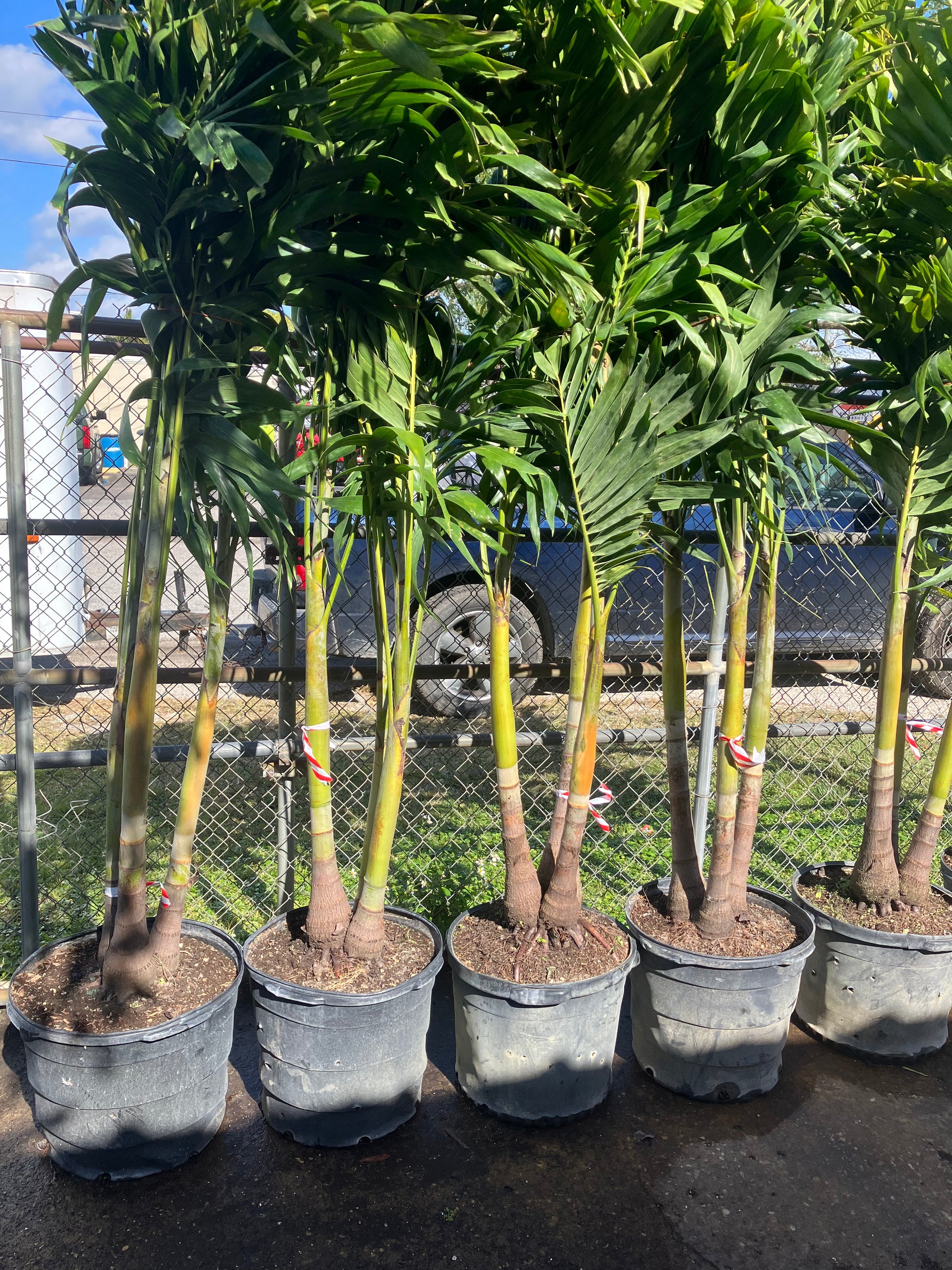
The Christmas Palm is one of the most popular ornamental palms in tropical landscapes. Its elegant feathery fronds and clusters of bright red fruit — which appear around Christmas — make it a year-round showpiece. Perfect for Mérida's climate.
Adonidia merrillii, the Christmas Palm (also called Manila Palm), is native to the Philippines and is one of the most widely planted ornamental palms in tropical regions worldwide. It gets its common name from the clusters of bright red fruit that ripen around the Christmas season, creating a festive display. The palm grows to 6–8 meters with a slender, ringed trunk and a graceful crown of arching, feathery fronds. Unlike many palms, the Christmas Palm is self-cleaning — old fronds fall off naturally without leaving persistent bases on the trunk. It is an excellent choice for Mérida gardens, streets, and container planting due to its manageable size and low maintenance requirements.
Christmas Palm requires full sun for best growth and fruit production. Plant in the sunniest spot available — at least 8 hours of direct sunlight per day. While it can tolerate brief periods of partial shade, insufficient light results in a sparse crown and reduced fruit production. Young palms (first 1–2 years) benefit from some protection from the most intense afternoon sun while establishing.
Water regularly during the first 6–12 months after planting to establish a deep root system. Once established, Christmas Palm is moderately drought-tolerant but performs best with regular watering during dry season. Water deeply once or twice a week in dry conditions, allowing the soil to dry slightly between waterings. Overwatering can cause root rot — ensure excellent drainage. In Mérida's rainy season, supplemental watering is rarely needed.
Sandy, well-draining soil is ideal. Christmas Palm is well-adapted to Mérida's limestone-based soils and tolerates slightly alkaline conditions (pH 6.0–8.0). It does not tolerate heavy clay or waterlogged conditions. When planting, dig a hole 2–3 times the width of the root ball but no deeper. Backfill with native soil — do not amend heavily, as this can create a 'bathtub effect' that traps water.
Use a palm-specific slow-release fertilizer (8-2-12 with micronutrients) three times per year: spring, summer, and fall. Palm fertilizers are specially formulated to provide the magnesium, manganese, and iron that palms require. Deficiencies appear as yellowing fronds (magnesium), frizzled new growth (manganese), or pale new fronds (iron). Never use high-nitrogen lawn fertilizers on palms — these promote rapid, weak growth and can cause nutrient imbalances.
Christmas Palm is largely self-cleaning — old fronds turn brown and fall naturally. Only remove fronds that are completely brown and dead. Never remove green or partially green fronds — this stresses the palm and can introduce disease. Do not 'hurricane cut' (remove all but the newest fronds) — this practice severely weakens palms. The fruit clusters can be removed before they ripen if desired, or left for ornamental effect.
Christmas Palm is susceptible to several pests in Mérida's climate: Lethal Yellowing Disease (a phytoplasma transmitted by planthoppers — preventable with regular oxytetracycline injections), Palm weevil (Rhynchophorus palmarum — monitor for wilting crown, treat with systemic insecticide), Scale insects (treat with horticultural oil spray). Inspect palms regularly and address issues early — palm diseases can progress rapidly.
Christmas Palm is propagated from seed. Collect ripe red fruit, remove the flesh, and plant fresh seeds in well-draining seed mix. Germination takes 2–3 months. Seedlings grow slowly for the first 2–3 years before accelerating. Christmas Palm does not produce offshoots (pups) and cannot be propagated vegetatively.
The Christmas Palm is one of the most planted ornamental palms in Florida, Hawaii, and tropical regions worldwide. In the Philippines, where it is native, it is called 'Anahaw' and is the national leaf symbol. The bright red fruit clusters that give it its common name are not edible for humans but are eaten by birds, which helps disperse seeds naturally. A mature Christmas Palm can produce multiple fruit clusters simultaneously, creating a spectacular display of red against the tropical sky.
At-a-glance care specs
Light
Full sun
Water
Moderate — drought tolerant once established
Temperature
65°F – 100°F (18°C – 38°C)
Humidity
Moderate to high
Soil
Sandy, well-draining soil
Mature Size
20–25 feet tall
Growth Rate
Moderate
Origin
Philippines
Difficulty
🌱 Easy to Grow0 items